This week’s minor league update spotlights a 25-year-old Arizona Fall League breakout and a slugger whose contact issues remain a concern.
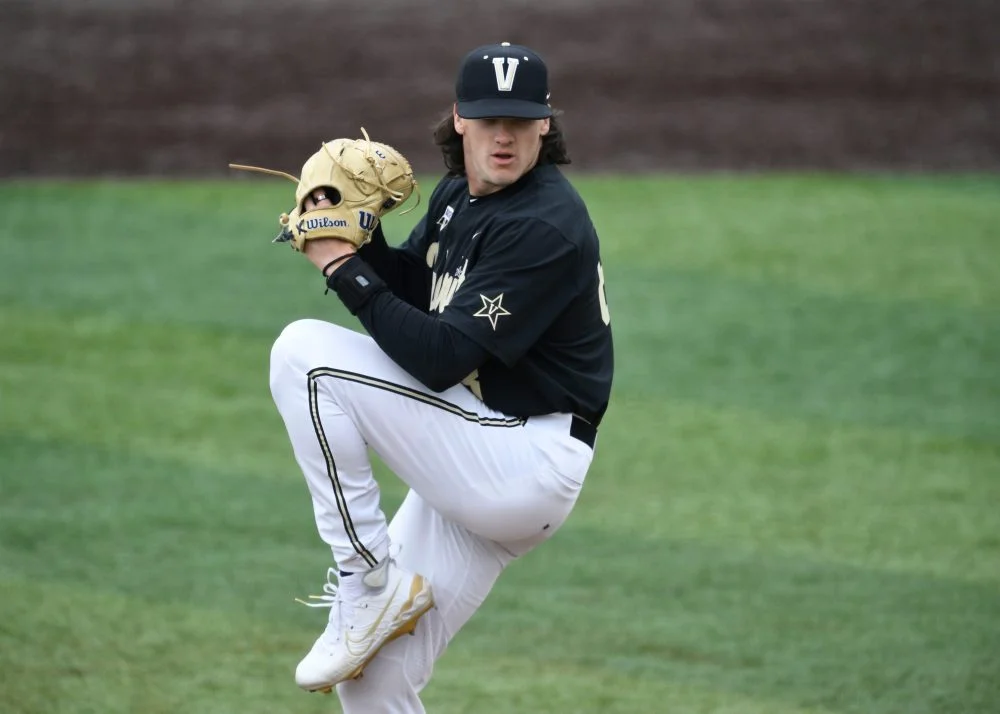
Two different questions about player development
This week’s minor league update turns on a contrast: a 25-year-old making an impression in the Arizona Fall League, and a power hitter whose difficulty making contact clouds his outlook. One story is about whether a promising stretch can point to further growth. The other is about whether a major strength can matter enough when a hitter doesn’t reliably put the ball in play.
Those questions sit at the heart of player evaluation. A strong showing can draw attention, but scouts and teams generally have to weigh it against a player’s broader record, role and development needs. A hitter’s power is also only one part of the picture; contact affects how often that power has a chance to show up in games.
A late-career development worth watching
A 25-year-old standing out in the Arizona Fall League presents an unusual development story mainly because age changes the context. The source describes the player as making an impression, but gives no performance details or background on his path through the minors. That leaves the scale of the breakthrough unclear. Still, the update raises a reasonable question: whether he’s found an adjustment that could carry into future opportunities.
The Fall League is a setting where minor league players can receive focused competition and attention, making a notable showing useful as a signal. It’s not a verdict. Short stretches can reveal progress, but they can also flatter a player if the sample is limited or the underlying skill hasn’t changed. A careful read would look for repeatable improvements in approach and execution, rather than treating a strong impression as proof of a lasting transformation.
This is more significant than it looks if the performance reflects real development. Players can make gains at different points in their careers, and age alone doesn’t settle what comes next. The harder question is whether the player can keep producing when the setting and opposition change.
Power with a contact problem
The slugger’s challenge is more direct: power has limited value when frequent contact problems keep a hitter from reaching the ball. The source doesn’t specify the player’s strikeout rate, power production or other numbers, so the size of the gap can’t be measured here. But the tension is familiar in baseball evaluation. A hitter can have the ability to drive the ball and still struggle to turn that ability into steady results.
Contact issues can arise for different reasons, including a swing that’s difficult to control, trouble recognizing pitches, or an approach that leaves too many hittable chances unused. Those are general possibilities, not explanations established by this update. Without more detail, the central point is simpler: the hitter’s ability to make contact remains the obstacle in assessing his outlook.
Here’s the thing: power tends to attract attention because it can change the result of an at-bat in one swing. But if a hitter too often misses, that strength can’t carry the whole profile. The numbers here are underwhelming as a basis for a firm judgment; they identify the problem without showing how severe it is or whether it’s improving.
What the contrast tells us
The two stories call for different kinds of patience. The 25-year-old’s showing invites follow-up: is there a development that holds up beyond this stretch? For the slugger, the priority is to understand whether contact can improve enough to let his power play more consistently. Neither question can be answered from the brief update alone.
(And this is the part most people overlook.) A single label such as “breakout” or “power hitter” can flatten the detail that matters in player development. The useful evidence is whether a player’s strengths translate across settings, and whether a weakness is narrowing over time. Until that pattern is clearer, both stories remain open.
Implications for the next evaluation
If you’re working in this space, the practical takeaway is to watch for the next evidence that speaks directly to each question. For the Fall League standout, that means seeing whether the impression connects to sustained progress. For the slugger, it means watching whether contact improves enough to support the power. The source offers no results beyond the current update, so any stronger conclusion would be premature.
That said, these are useful reminders of how uneven development can look. One player may be drawing attention later than expected, while another has a clear tool that comes with a visible limitation. A snapshot can flag both stories. The next stretch of performance will determine whether either becomes more than a question.
A signal, not a conclusion.
Discussion
Sign in to join the discussion.